


15-minute read
Originally published 19 July 2024. Updated 27th September 2026.
Introduction
The science, history and formulation of a plant-derived active without the hero-ingredient mythology
Bakuchiol has acquired several flattering labels: natural retinol, bio-retinol, phyto-retinol and the gentle alternative to retinol.
The popularity is understandable. Bakuchiol is plant-derived, has credible evidence for improving visible signs of photoageing and is often well tolerated. But some of the names used to market it are chemically inaccurate, while some claims run several energetic steps ahead of the research.
Bakuchiol does not need to borrow retinol's identity to be valuable. It is a distinct active with its own chemistry, biological effects, limitations and formulation requirements.
Here are seven facts that explain what bakuchiol is, what the evidence supports and how it fits into a balanced skincare routine.
Fact 1 - Bakuchiol Is Not a Plant Form of Retinol
Bakuchiol is a meroterpene phenol most commonly obtained from the seeds of Cullen corylifolium, also known by the botanical synonym Psoralea corylifolia and the common names babchi or bakuchi. An image of the plant flower and berries in below.

Retinol belongs to the vitamin A family. Bakuchiol does not. The molecules have different chemical structures, and bakuchiol is not converted into retinoic acid in the skin.
Why, then, is it constantly compared with retinol?
Laboratory studies suggest that bakuchiol can influence some gene-expression and protein pathways associated with extracellular matrix support, including pathways relevant to collagen. These effects overlap with some of the cosmetic outcomes associated with retinoids, even though the compounds are chemically unrelated and do not use identical mechanisms.
Calling bakuchiol a plant-derived retinol alternative is a useful shorthand when discussing cosmetic goals. Calling it plant retinol implies a chemical identity that does not exist.
Fact 2 - The Babchi Plant Has a Long History but Purified Bakuchiol Is a Modern Active
Babchi has a longstanding place in Ayurvedic and traditional Chinese medicine. Preparations made from the plant have historically been used for a variety of conditions, including skin disorders.
That history deserves recognition, but it must be described accurately. The traditional use of the whole plant, seeds or seed preparations is not the same as the use of purified bakuchiol in a modern cosmetic formulation.
Bakuchiol was isolated and characterised during twentieth-century phytochemical research. A contemporary serum containing a defined percentage of purified bakuchiol therefore combines traditional botanical knowledge with modern extraction, purification, formulation and safety assessment.
There is another important distinction.
Babchi material can contain psoralens, compounds associated with photosensitivity. A suitably purified cosmetic bakuchiol ingredient is not interchangeable with crude babchi oil or an improvised botanical extract. This is one reason ingredient provenance, purity and formulation matter.
The similarity between the words bakuchi and bakuchiol also creates understandable confusion.
Babchi or bakuchi oil is a complex botanical mixture in which bakuchiol is only one of many constituents. Its composition, including its bakuchiol content, can vary with the plant material, growing conditions and extraction method.
- Purified cosmetic-grade bakuchiol therefore provides a far higher and more standardised concentration of the bakuchiol molecule than an equal volume of babchi oil.
- Equal volumes of babchi oil and purified bakuchiol should never be assumed to provide equivalent bakuchiol concentration or biological activity.
- This does not mean that babchi oil has no activity; it means that the oil behaves as a variable mixture of compounds, while purified bakuchiol supplies one defined active at a known concentration.
- Some cosmetic products contain one of these ingredients, while others contain both.
Fact 3 - Bakuchiol Has Credible Clinical Evidence but the Evidence Base Is Still Developing
Bakuchiol is not supported only by tradition or laboratory theory. Human clinical studies have reported improvements in visible signs of photoageing, including fine lines, pigmentation, elasticity and firmness.
The best-known comparative study followed 44 participants for 12 weeks.
Participants applied either 0.5% bakuchiol twice daily or 0.5% retinol once daily. Both groups showed significant improvement in measured wrinkle surface area and hyperpigmentation, with no statistically significant difference between the groups for those outcomes. Participants using retinol reported more scaling and stinging.
This is encouraging evidence, but it should not be stretched beyond its design. The trial was small, the ingredients were used at different frequencies, and one study cannot establish equivalence across all concentrations, formulations, skin types and time periods.
A systematic review has described bakuchiol as having promising anti-ageing, antibacterial and anti-inflammatory applications, while also concluding that additional studies are needed.
That is the appropriately measured position: bakuchiol is a credible active, not an evidence-free trend, but its clinical literature is not yet as extensive as the literature for retinoids.
Fact 4 - Bakuchiol Does More Than Target the Appearance of Fine Lines
Bakuchiol is usually introduced as an anti-ageing ingredient, but this description can be too narrow.
Research has investigated several properties relevant to skin appearance and function:
· Antioxidant activity, which can help limit oxidative processes associated with environmental stress.
· Anti-inflammatory activity, which may contribute to a calmer-looking complexion.
· Influence on pathways involved in collagen and extracellular matrix maintenance.
· Improvements in the appearance of uneven pigmentation and skin texture in clinical studies.
· Antimicrobial activity in laboratory research, including activity relevant to acne-associated microorganisms and biofilms.
These findings do not mean that bakuchiol is a treatment for every inflammatory condition, pigmentation disorder or form of acne.
Laboratory activity is not automatically a clinical result, and a cosmetic product should not be presented as a medicine.
Its broader relevance is that bakuchiol can support several visible aspects of ageing skin without being reduced to a single wrinkle claim.
For example, as shown in the diagram below of a stylised cross-section of the skin, the with overall benefits of skincare are to improve the condition of the skin surface, the sub-cutaneous tissue (SAT), as well as the deep adipose (fat) tissue (DAT).

Fact 5 - Better Tolerability Does Not Mean Reactions Are Impossible
Bakuchiol is frequently selected because it is often better tolerated than retinol. The comparative clinical trial reported more scaling and stinging among the retinol users, supporting that reputation.
However, gentle is not a guarantee, and natural does not mean incapable of causing a reaction. Contact dermatitis associated with bakuchiol has been reported, including a published case report in 2026. Any active ingredient, botanical material or complete formulation can be unsuitable for a particular person.
The sensible approach is to:
· patch test when the skin is highly reactive;
· introduce one new treatment product at a time;
· follow the directions for the finished product;
· stop use if persistent burning, swelling, itching or marked inflammation develops; and
· seek professional advice when a skin condition may be present.
Bakuchiol may be appropriate for sensitive skin, but it does not treat the state of being sensitive simply by arriving in the bottle.
Fact 6 - Concentration Matters but Formulation Matters More
Consumers are often encouraged to shop by percentage. A percentage can be useful, but it is not a complete measure of product quality or likely performance.
A finished bakuchiol product is influenced by:
· the purity and provenance of the raw material;
· the concentration used;
· the stability of the formulation and packaging;
· the oils, emulsifiers, humectants and other active ingredients surrounding it;
· the presence or absence of fragrance and avoidable irritants; and
· how the product is used within the wider routine.
A high number on the label does not compensate for a poorly conceived formulation. Nor does adding bakuchiol to every cleanser, moisturiser and treatment product produce a more intelligent routine. It can simply add cost and complexity.
Azurlis™ uses 0.9% bakuchiol in the Luminous Bakuchiol Serum as part of a multi-active formulation. It is accompanied by niacinamide, N-acetyl glucosamine, tetrahexyldecyl ascorbate, complementary hyaluronic acid, antioxidant oils and three peptides: Palmitoyl Tripeptide-1, Palmitoyl Tetrapeptide-7 and Palmitoyl Tripeptide-38.
Each ingredient has a defined supporting role. Bakuchiol is important, but it is not expected to perform the entire orchestra alone.
Fact 7 - Bakuchiol Works Best as Part of a Complete Routine
A bakuchiol serum product does not replace a moisturiser, and neither product replaces sunscreen.
For mature, dry or easily reactive skin, a balanced routine may include:
· gentle cleansing that does not leave the skin tight;
· hydration where it is needed;
· a bakuchiol treatment product for defined cosmetic goals;
· a moisturiser that supports comfort and reduces water loss; and
· daily broad-spectrum sun protection.
Bakuchiol-containing products can often be formulated for daytime or night-time use. The directions for the finished product still matter, and daytime use does not remove the need for sunscreen.
Consistency also matters more than aggression.
Visible changes in texture, tone and fine lines develop over time. Using more product, applying it more frequently than directed or surrounding it with multiple strong actives will not necessarily accelerate the outcome. It may simply make the skin less comfortable.
What the Seven Facts Mean in Practice
|
Marketing shorthand |
More accurate interpretation |
|
Natural retinol |
A plant-derived active that is chemically unrelated to retinol but has some overlapping cosmetic applications. |
|
Used for thousands of years |
The babchi plant has a long traditional history; purified bakuchiol is a modern cosmetic active. |
|
Clinically proven to replace retinol |
Clinical evidence supports benefits for photoageing, but the ingredients are not universally interchangeable. |
|
Safe for sensitive skin |
Often well tolerated, but individual reactions remain possible and the finished formulation matters. |
|
More bakuchiol is better |
An appropriate concentration within a well-designed formulation is more useful than percentage chasing. |
|
The hero of the routine |
One useful active within cleansing, moisturising, sun protection and consistent skincare habits. |
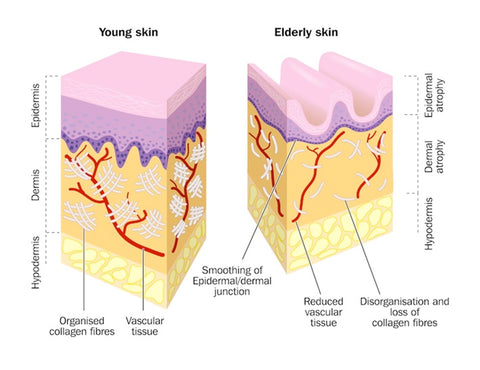
The stylised diagram below shows the changes that occur as skin ages, where the collagen and elastin matrix become disorganised leading to the formation of wrinkles. Good skincare practices contribute to slowing down these changes. The results however, differ from person to person.
Frequently Asked Questions About Bakuchiol
Is Bakuchiol Really Natural
Bakuchiol is a naturally occurring plant compound. Cosmetic-grade bakuchiol is extracted and purified using controlled manufacturing processes. Natural origin does not mean unprocessed, and purification is important for quality and safety.
Is Bakuchiol the Same as Babchi Oil
No. Babchi or bakuchi oil is a variable mixture of many plant-derived compounds, while cosmetic-grade bakuchiol is one specific purified molecule. The oil may contain some bakuchiol, and a product may contain either ingredient or both. However, equal volumes should not be assumed to provide equivalent bakuchiol concentration or biological activity. Purified bakuchiol delivers a much higher and more standardised concentration of that particular molecule.
Can Bakuchiol Be Used Every Day
Many finished bakuchiol products are designed for daily use, but concentration and formulation differ. Follow the directions for the particular product and introduce it gradually if your skin is highly reactive.
Can Bakuchiol Be Used During the Day
Bakuchiol products can be formulated for daytime use because bakuchiol is not a retinoid and is not used under the same customary nighttime-only guidance. Follow the finished product directions and use broad-spectrum sunscreen during the day.
Does Bakuchiol Cause Purging
Purging is not an essential sign that bakuchiol is working. A sudden increase in irritation or breakouts should not automatically be celebrated as progress. Consider the complete formulation, frequency of use and whether the product suits your skin.
How Long Does Bakuchiol Take to Work
The best-known comparative clinical study assessed results after 12 weeks. Individual results vary with the formulation, skin condition, UV exposure, lifestyle and consistency. Cosmetic skincare should be judged over months rather than days.
Can Bakuchiol Replace a Moisturiser
No. Bakuchiol is an active ingredient, not a complete moisturising strategy. Dry, mature or sensitive skin usually benefits from an appropriate moisturiser used alongside the treatment product.
The Azurlis™ Perspective
Bakuchiol fits the Azurlis™ formulation philosophy because it provides a scientifically credible, plant-derived and vegan approach to supporting visible skin renewal.
We do not use it because natural ingredients are automatically superior to synthetic ones. We use it because its properties, tolerability and compatibility make sense within the formulation we wanted to create.
The Luminous Bakuchiol Serum is designed to support mature, dry and easily reactive skin without asking bakuchiol to do everything. The serum product works alongside moisturising, sun protection and the daily habits that influence how skin looks and feels.
Good skincare is not built by collecting fashionable actives. It is built by choosing a few well-formulated products that work together and that the skin can use consistently.
The Take Home Message
Bakuchiol deserves more accurate language than natural retinol and more respect than being described only as retinol's gentler substitute.
It is a distinct plant-derived active with credible evidence for supporting the appearance of fine lines, pigmentation, texture and firmness. It also has antioxidant, anti-inflammatory and antimicrobial properties that continue to be investigated.
Its limitations matter too. The clinical evidence base is still developing, reactions remain possible, and the finished formulation determines far more than the ingredient name alone.
Bakuchiol does not need to occupy the entire sofa. It simply deserves its own well-chosen seat within a balanced routine.
References
1. Dhaliwal S et al. Prospective, randomised, double-blind assessment of topical bakuchiol and retinol for facial photoageing. British Journal of Dermatology. 2019;180(2):289-296. doi:10.1111/bjd.16918.
2. Chaudhuri RK and Bojanowski K. Bakuchiol: a retinol-like functional compound revealed by gene expression profiling and clinically demonstrated to have anti-aging effects. International Journal of Cosmetic Science. 2014;36(3):221-230. doi:10.1111/ics.12117.
3. Puyana C et al. Applications of bakuchiol in dermatology: systematic review of the literature. Journal of Cosmetic Dermatology. 2022. PMID: 36176207.
4. Mascarenhas-Melo F et al. Comprehensive review of the skin use of bakuchiol: physicochemical properties, sources, bioactivities, delivery systems and regulatory status. Phytochemistry Reviews. 2024. doi:10.1007/s11101-024-09926-y.
5. Alam F et al. Psoralea corylifolia L: ethnobotanical, biological, and chemical aspects. Phytotherapy Research. 2018;32(4):597-615. PMCID: PMC7167735.
6. Krishna TPA et al. Bakuchiol, a natural meroterpenoid: structure, isolation, synthesis and functionalisation approaches. RSC Advances. 2022;12:8815-8832. PMCID: PMC8985110.
7. Sánchez-Arjona M et al. Allergic contact dermatitis to bakuchiol used for photodamage prevention: a case report. Contact Dermatitis. 2026;95(2):229-230. doi:10.1111/cod.70169.


